Featured · UN3536 · Class 9 energy storage
BESS Battery Hauling
Battery energy storage is the most demanding freight in domestic logistics. A containerized BESS unit — typically a 20-foot ISO enclosure holding several MWh — routinely weighs 43+ tons, ships as one integrated assembly (cells + BMS + thermal + fire suppression), and moves as UN3536 Class 9 dangerous goods under Special Provision 389. It is simultaneously a hazmat move and a heavy-haul move, and the schedule is unforgiving: the EIA expects developers to add roughly 24 GW of utility-scale battery storage in 2026 alone, with Texas, California, and Arizona absorbing most of it. Harris Brokerage matches each shipment to a carrier pre-approved for that exact battery chemistry — not a generic hazmat carrier — and manages permitting, placarding, securement, and site sequencing end to end.
- Same-day
- Quote turnaround
- 150K+
- Vetted carriers
- 24/7
- Tracking & tracing

Capabilities
What we handle.
Compliance & assurance
- UN3536 Class 9 classification for batteries installed in a cargo transport unit
- Special Provision 389 — UN38.3-tested cells, overcharge/over-discharge protection, batteries secured against transport shock
- CTU marked with the UN number per 49 CFR §172.332 and placarded Class 9 on two opposing sides
- State-of-charge verified and documented to the OEM/carrier protocol (commonly ≤30%) before release
- Carrier pre-approval per battery chemistry — a generic SDS is not accepted
- Integrated-unit handling: battery, BMS, thermal, and suppression move as one asset
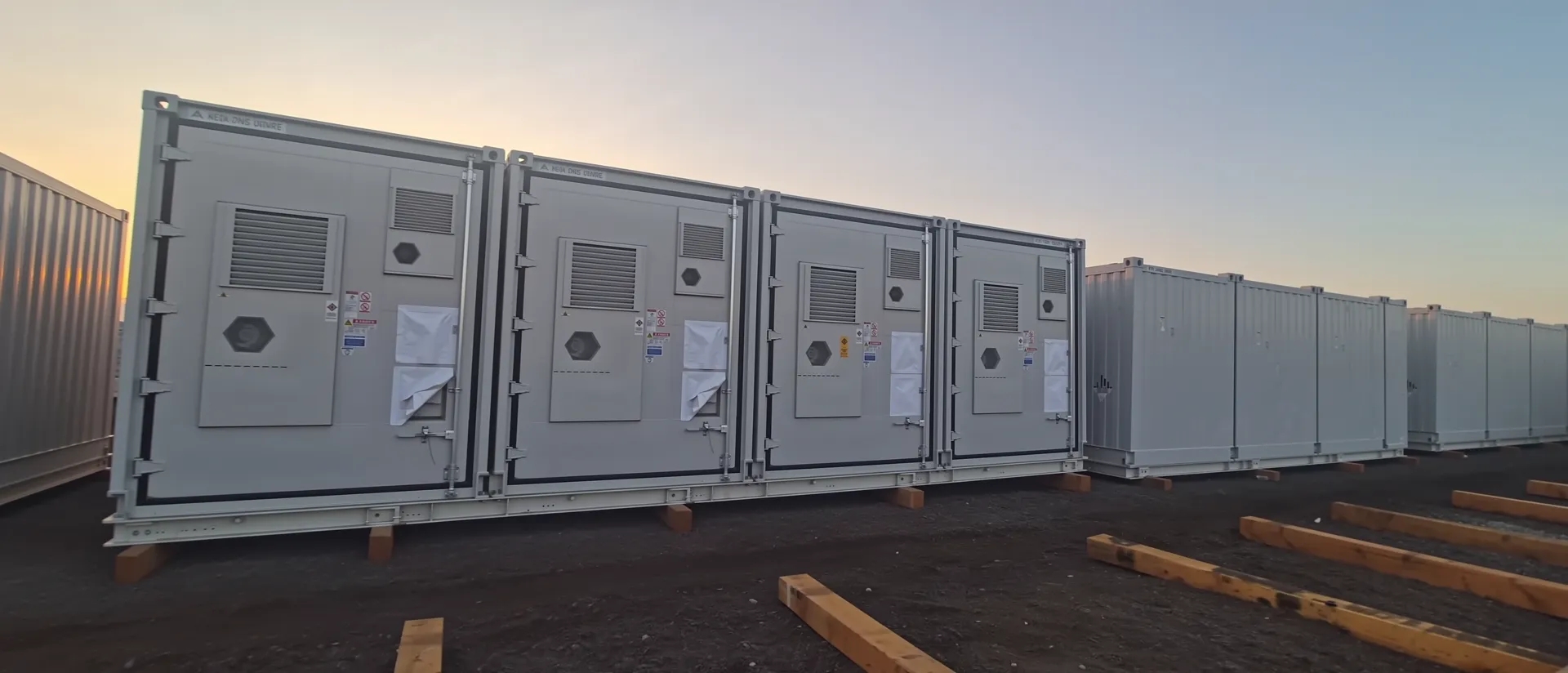
43 tons of stored energy, landed once — on the pad, on the date.
Featured · UN3536 · Class 9 energy storage
Field documentation
Our work, not stock photography.
Every frame below is from a live Harris Brokerage battery energy storage delivery — containers landed on prepared grade, Class 9 placarding in the open, and the lifting equipment that actually sets a 43-ton enclosure. Hover a frame to bring it back to colour; select it to open full size.
Where this fits
Transport → Crane → Storage
This service
Transportation
Vetted, insured capacity across every lane — drayage, full truckload, refrigerated, hazmat, and permitted heavy/oversize — matched to chemistry-qualified and superload-rated carriers where the freight demands it.
This service
Crane Lifting
Certified crane and rigging at origin and destination — capacity matched to 43+ ton integrated units, with engineered lift plans for safe placement.
This service
Storage
Warehousing, transloading, and secured staging that sequence freight into the site on the business schedule — phased, inventoried, and ready for the final lift.
FAQ
BESS Hauling, answered.
What is BESS hauling and why does it need a specialist?
BESS stands for Battery Energy Storage System — the grid-scale lithium battery installations that store renewable and off-peak energy. Transporting one is two hard problems at once. It is Class 9 dangerous-goods freight under UN3536 (batteries installed in a cargo transport unit), and a containerized MWh-scale unit routinely weighs 43+ tons, which makes it an overweight heavy-haul move as well. Harris Brokerage manages both compliance layers together: chemistry-qualified carrier pre-approval, UN3536 marking and Class 9 placarding, Special Provision 389 securement, multi-state permitting, and site sequencing.
What does UN3536 Special Provision 389 actually require?
SP 389 covers lithium batteries installed in a cargo transport unit to power that unit. The batteries must meet 49 CFR §173.185(a) — UN38.3 tested — and include systems preventing overcharge and over-discharge between batteries. They must be securely attached to the interior structure, in racks or cabinets, so they cannot short circuit, operate accidentally, or shift under normal transport shock, loading, and vibration. Dangerous goods needed for safe operation of the unit, such as fire suppression or air conditioning, may remain installed; anything not needed for its operation must not travel inside. The container itself must display the UN number per §172.332 and carry Class 9 placards on two opposing sides.
Is there a state-of-charge limit for shipping BESS units?
It depends on the mode, and this is widely misstated. For air transport, IATA/ICAO rules cap lithium batteries at 30% state of charge in defined configurations. For domestic highway transport of UN3536, 49 CFR does not impose a numeric SoC cap — Special Provision 389 instead requires UN38.3-tested batteries, systems that prevent overcharge and over-discharge, and secure attachment inside the unit. In practice most OEMs, insurers, and carriers still specify a low state of charge (commonly 30% or less) as a condition of carriage. We verify and document SoC to whichever protocol governs your shipment rather than assuming a single universal number.
How much does a containerized BESS unit weigh, and does it need permits?
A 20-foot containerized battery energy storage unit commonly runs 40 to 50+ tons depending on chemistry and MWh rating. Because federal law caps interstate gross vehicle weight at 80,000 lb, most BESS containers exceed the legal limit once loaded and require oversize/overweight permits in every jurisdiction on the route, often with pilot escorts and a bridge-clearance and road-weight route survey. We handle the permitting and route engineering as part of the move rather than as a separate line item.
Can you deliver to an unfinished project site?
Yes — that is the normal condition for utility-scale storage. Sites are usually compacted gravel or graded dirt with no dock, no fixed crane, and a foundation schedule that is still moving. We coordinate the equipment that actually lands the unit, sequence deliveries so containers arrive as their pads are ready, and stage the balance in secured storage so the yard never becomes the bottleneck. Where the schedule slips, staging absorbs it instead of demurrage.
Why is BESS transport capacity so tight right now?
Deployment is outrunning specialized capacity. The EIA expects developers to add roughly 24 GW of utility-scale battery storage in 2026, up from a record 15 GW in 2025, and industry forecasts put cumulative US storage near 200 GW by 2031. Texas, California, and Arizona account for most near-term additions. The constraint is not trucks in general — it is carriers pre-approved for a specific battery chemistry, running permitted overweight configurations, on a project schedule. Booking that capacity early is the difference between a pad sitting empty and a unit landing on time.
More services
Everything else we broker.
Need bess hauling? Let's scope it.
- Same-business-day quotes
- Carriers vetted via RMIS & Carrier411
- Compliance handled end to end